You know that tight feeling across your shoulders at the end of a long week? Or the low-grade ache in your neck that never quite goes away, even on a good day? That tension is not just in your head. It has a physical address, and your muscles are carrying it whether you notice it or not.
Stress and muscle tension are deeply connected, and for many people in Beaverton and the surrounding area, that connection becomes a cycle that's hard to break without some hands-on support. Deep tissue massage is one of the most effective tools for interrupting that cycle. Here's how it works and why it may be the reset your body has been waiting for.
What Stress Actually Does to Your Muscles
When your brain registers a threat, a work deadline, a difficult conversation, a packed schedule, your nervous system triggers the fight-or-flight response. Cortisol and adrenaline flood your system. Your muscles contract, ready to act.
The problem is that most modern stress doesn't have a physical outlet. The threat passes, but the muscular bracing doesn't. Over time, the muscles most involved in that stress response, the trapezius across your upper back, the neck extensors, the hip flexors, the jaw, begin to hold a kind of residual tension. They stay partially contracted even at rest.
This is called chronic muscle guarding, and it's incredibly common. Psychological stress is consistently linked to musculoskeletal complaints including back pain, neck stiffness, and headaches. The body keeps a running tab.
Where Stress Tends to Collect
While stress can settle almost anywhere, certain areas are particularly vulnerable.
Neck and upper trapezius. This is the area most people point to when they say "I carry my stress here." The muscles that hold your head upright also respond to emotional strain, especially during long hours of computer work or phone use.
Lower back. Chronic low-level stress keeps the erector spinae and surrounding lumbar muscles braced. This is one reason lower back tension often doesn't have a clean mechanical cause. It's as much about the nervous system as the spine.
Shoulders and chest. When we're stressed, we tend to round forward and raise our shoulders toward our ears. Held long enough, this postural pattern compresses the chest muscles and over-stretches the muscles between the shoulder blades, creating an imbalance that's deeply uncomfortable.
Jaw and scalp. Jaw clenching and teeth grinding are classic stress responses. The tension that starts in the masseter muscle can radiate upward, contributing to tension headaches and a general sense of tightness across the skull.
How Deep Tissue Massage Addresses Stress-Related Tension
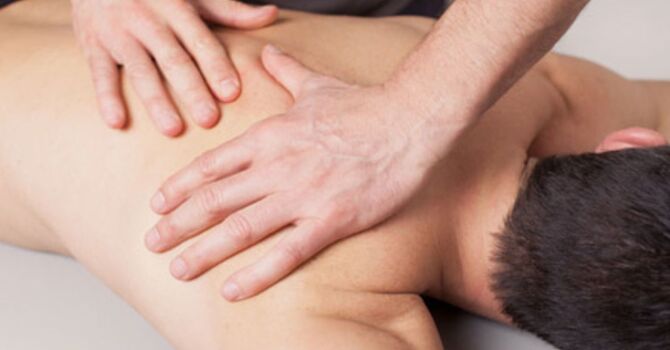
Deep tissue massage works at a different level than a relaxation massage. While Swedish massage uses lighter pressure to promote general calm and circulation, deep tissue techniques apply slow, deliberate pressure to the underlying layers of muscle and connective tissue where chronic tension actually lives.
The benefits of deep tissue massage for stress-related muscle tension include several interconnected effects. Direct mechanical pressure on contracted muscle fibers encourages them to release and lengthen. The sustained focus on problem areas helps break up adhesions, the fibrous sticky build-up that forms in chronically tight tissue, which is why areas that have been tense for years often need more than one session to fully release.
At the same time, deep tissue massage activates the parasympathetic nervous system, your "rest and digest" mode. This is the counterpart to the fight-or-flight response that started the whole tension cycle. Heart rate slows. Cortisol levels drop. The body gets the physiological signal that the threat has passed, which allows muscles to genuinely let go rather than just feel temporarily looser.
What to Expect During a Deep Tissue Session
A common misconception is that deep tissue massage has to hurt to work. Skilled practitioners know that effective deep work requires the client to stay relaxed. If the pressure creates bracing, it's working against itself.
At Athena Arris LMT in Beaverton, Athena brings 16+ years of licensed massage therapy experience to every session. Her approach to deep tissue work is intentional and responsive, not just heavy-handed. She works with your body's signals, using the right depth at the right pace to encourage release rather than force it. If you've had deep tissue work before that left you sore for days, a session with a skilled, experienced therapist often feels quite different.
You may notice that certain areas feel more guarded than others. Spots that have been carrying tension the longest tend to require the most patience. That's normal, and it's exactly why massage for muscle tension targets those layers specifically rather than glossing over the surface.
How Often Should You Get Deep Tissue Work for Stress?
For acute stress that has created recent tightness, a single session can make a noticeable difference. For chronic tension that has built up over months or years, a series of sessions is usually more effective, typically spaced one to two weeks apart at first, then transitioning to monthly maintenance once the baseline tension starts to shift.
Consistency matters more than frequency. A monthly deep tissue session, kept up over several months, tends to produce more lasting change than occasional intensive work followed by long gaps.
A Different Kind of Stress Relief
Plenty of things reduce stress in the moment: a good workout, a walk, a glass of wine. Deep tissue massage does something different. It addresses the physical record that stress has left in your body, not just how you feel right now.
If chronic tension, tight muscles, or stress-related aches have become a background condition in your daily life, it may be time to go a layer deeper.
Athena Arris LMT is located in Beaverton, OR, serving clients from Hillsboro, Tigard, Cedar Hills, and the Portland west side. To learn more or to book a session, explore deep tissue massage in Beaverton or reach out directly to talk through what you're experiencing and whether this kind of work is the right fit for you.